
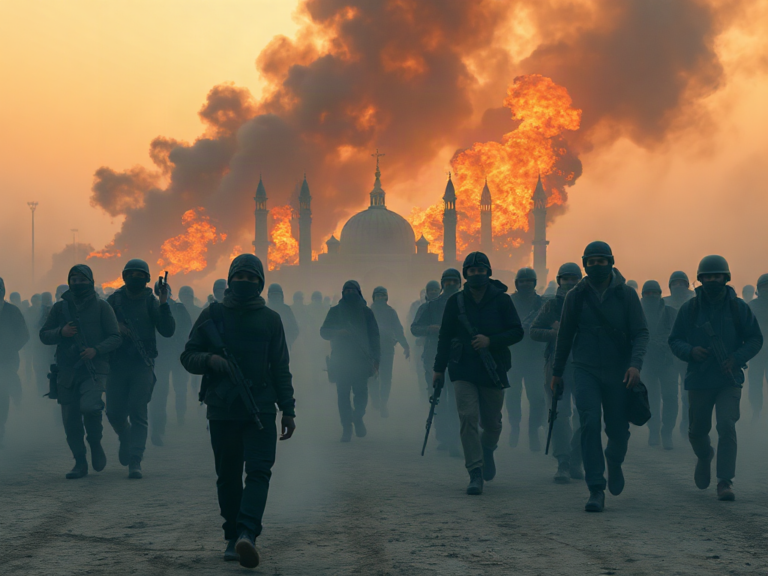
Forgiveness Without Handing the Past Your Future

Forgiveness Without Handing the Past Your Future

Today’s Scripture
Genesis 50:19-21WEB

Joseph said to them, “Don’t be afraid, for am I in the place of God?
As for you, you meant evil against me, but God meant it for good, to bring to pass, as it is today, to save many people alive.
Now therefore don’t be afraid. I will nourish you and your little ones.” He comforted them, and spoke kindly to them.

Read the full passage: Genesis 50:15-21

The photograph usually appeared when the drawer was opened for something else—a spare key, an old receipt, a pen that still worked if held at the right angle. There it was: a family smiling beneath an ordinary afternoon sky. One hand rested on a shoulder. Everyone looked close. The picture was small enough to hide, yet powerful enough to rearrange the room.

After a funeral, an old injury can become newly present. The person who caused the harm may now be aging, grieving, or suddenly dependent, and compassion gets tangled with memory. You may wonder whether forgiveness means lowering your guard, minimizing the damage, or handing the past a clean bill of health.

Joseph faced that tension after his father died. His brothers had sold him into slavery years earlier. Now they feared Joseph would use his authority to settle the account. Genesis 50:15-21 gives us no sentimental family photograph in which the past disappears. The brothers remember what they did. Joseph remembers it too.

That is where the passage becomes more than a comforting story.

Joseph acknowledges that his brothers intended evil. He does not soften the word, rename cruelty as confusion, or pretend their choices caused no wound. Yet he also sees that God has been at work, preserving life through circumstances the brothers meant for destruction. Human intention and divine providence stand in sharp contrast: their sin was real, but it did not become sovereign.

This is the hard freedom forgiveness offers. It does not ask you to call evil harmless. It asks you to stop making the offender’s evil the blueprint for your remaining life.

Resentment is demanding work. It replays an old conversation during quiet evenings, edits every future interaction, and turns a family gathering into a seating chart of emotional hazards. A message can sit half-written on a phone for weeks because every sentence seems to promise either surrender or retaliation. Even children learn which names make the adults pause before speaking.

The photograph can become an unofficial family manager. It tells you whom to avoid, what to explain, and how much warmth is safe. The original harm happened once; resentment keeps appointing it to new positions.

Joseph’s response shows that forgiveness is not amnesia and not automatic reconciliation. Trust may need to be rebuilt slowly, or may never return in its former shape. Wise boundaries can be necessary. Abuse, exploitation, and serious wrongdoing may require protection, accountability, or legal justice. God’s providence never excuses the offender, and forgiveness never requires unsafe access.

Forgiveness releases vengeance without surrendering discernment.

Joseph had power over the people who had harmed him. Genesis 50 does not portray him as powerless or confused about the past. He chooses not to use his position for revenge. Instead, his freedom becomes useful: he can provide, protect, and preserve life rather than spend his strength keeping the old injury in charge.

That choice can begin quietly, before another family gathering or difficult message. Name what happened accurately. Write down the boundary that wisdom requires. Invite a mature, trustworthy Christian to help you distinguish forgiveness from permission. Then choose one act that refuses retaliation: stop recruiting relatives into the conflict, speak truth without contempt, fulfill a responsibility, or ask God to judge justly while you stop rehearsing the case for an hour each night.

These steps may look modest beside the wound. They are not weakness. They are preparation—love practiced before pressure arrives, responsibility clarified while choices remain open, and a heart readied to serve without pretending it was never hurt.

When Joseph looked at his brothers, he could see both realities: what they intended and what God had preserved. The second did not erase the first, but it kept the first from becoming the whole story. God had not called evil good; He had sustained Joseph through evil and made him free to bless without becoming its echo.

Perhaps the photograph will still stir the old ache. Let it tell the truth about what happened, but not dictate what happens next. You can keep watch over your safety, pursue appropriate justice, and place revenge in God’s hands. In that surrendered space, the wound loses its management position, and your life becomes available again for courage, provision, and peace.

Let the picture remember the harm; let your faithful choices frame what comes after.

Faith Actions

Reflect

What specific harm do you need to name truthfully, and what would releasing revenge look like without removing a necessary boundary?

Act

Write down one accurate sentence describing the harm, one boundary that protects those involved, and one non-retaliatory act of care you can take this week for someone affected by the conflict.

Let Us Pray

God, help me tell the truth about what happened without making the wound the manager of my life. Give me wisdom to keep necessary boundaries, courage to pursue appropriate justice, and obedience to release revenge into Your hands so I can bless others without excusing evil.

Scripture quotations are from the World English Bible (WEB), Public Domain.
When Comfort Makes Your Heart Unavailable

When Comfort Makes Your Heart Unavailable

Today’s Scripture
Luke 12:35-37WEB

“Let your waist be dressed and your lamps burning.
Be like men watching for their lord, when he returns from the marriage feast; that, when he comes and knocks, they may immediately open to him.
Blessed are those servants, whom the lord will find watching when he comes. Most certainly I tell you, that he will dress himself, and make them recline, and will come and serve them.

Read the full passage: Luke 12:32-40

At bedtime, the house looks wonderfully settled. The dishes are stacked, the doors are locked, and one by one the lights disappear until the kitchen holds only the faint glow of the clock. Then your mother says, “You should get prepared,” and the sentence lands with all the charm of a smoke alarm during a nap.

Nothing appears wrong. The bills are paid!  Tomorrow’s calendar is ordinary.  No urgent message waits on the phone.  Preparation can feel like an insult to a peaceful life, as though planning ahead means accusing the present of hiding something.

But Jesus gives us another reason.

In Luke 12:35-37, He describes servants dressed for service with their lamps burning while they wait for their master to return. The picture isn’t frantic servants sprinting around the house inventing problems. It’s people who have arranged themselves to respond when the one they serve arrives. Their waiting is active. Their attention has a direction.

That changes the question.  We don’t prepare because calm is secretly a lie.  We prepare because comfort can quietly make the heart unavailable.

A lamp is hardly dramatic in daylight. Keeping it ready requires the sort of unglamorous faithfulness nobody applauds: oil supplied, wick trimmed, attention maintained. Spiritual readiness often looks just as ordinary. A prayer is kept on the calendar before a crisis makes prayer feel urgent. An apology is offered while the conversation can still be repaired. A neglected responsibility is handled before it becomes someone else’s burden.

Without those small decisions, good intentions become a storage closet full of unopened boxes. “I’ll serve when things slow down.” “I’ll learn that when I have more time.” “I’ll reach out next week.” A calm routine can make postponement look responsible. Meanwhile, prayer disappears because life feels manageable, duties collect in quiet corners, and opportunities to help pass by while we’re waiting to feel more ready.

Jesus’ command is not an invitation to obsess over headlines, predict dates, or control outcomes. Christian watchfulness is confident obedience under Christ’s authority. We don’t know the timing of His return, and we are not asked to manage other people’s choices. We are asked to remain faithful with the life and responsibilities already placed in our hands.

That is a more searching kind of preparation.

It asks whether my faith is merely settled or actually available. Can Christ interrupt my schedule without finding that every hour, gift, and relationship has been claimed by comfort? Can I respond to a need without first requiring ideal conditions? Preparedness is not panic wearing a religious name. It is love practiced early, while choices remain open and service can be offered without confusion.

Luke’s scene then turns unexpectedly. Jesus says that the master will bless those servants found watching—and, in the passage’s striking movement, the master will have them recline and serve them. Readiness is not grim self-protection. The Lord we await is not looking for an excuse to punish imperfect servants. He honors faithful attention with generous welcome.

So choose one practice before this comfortable week gives you another reason to delay. Set a recurring time for prayer. Schedule the conversation that needs honesty. Learn a skill that would make you more useful. Put one act of service where your calendar can see it. Not because disaster is around the corner, but because Christ is worthy of finding you awake and willing.

Ordinary peace can become training ground instead of spiritual sleep. The quiet evening, the predictable morning, and the uneventful day are not wasted space; they are where readiness is formed. A lamp kept burning through daylight declares that the household belongs to someone who may arrive at any hour.

Keep your heart available now, and Christ’s return will find you ready for joy.

Faith Actions

Reflect

Where has comfort caused you to postpone prayer, reconciliation, responsibility, learning, or service because life currently feels manageable?

Act

Choose one person who could benefit from your attention, then schedule a specific act of prayer, encouragement, reconciliation, or practical help this week and keep the appointment.

Let Us Pray

Lord Jesus, my peaceful routine can make me less attentive to You and less available to others. Teach me to prepare through faithful ordinary choices, keeping my heart awake, willing, and ready to serve when You call.

Scripture quotations are from the World English Bible (WEB), Public Domain.
When Peace Does Not Mean a Quiet Life

When Peace Does Not Mean a Quiet Life

Today’s Scripture
John 16:25-33WEB

I have spoken these things to you in figures of speech. But the time is coming when I will no more speak to you in figures of speech, but will tell you plainly about the Father.
In that day you will ask in my name; and I don’t say to you, that I will pray to the Father for you,
for the Father himself loves you, because you have loved me, and have believed that I came from God.
I came from the Father, and have come into the world. Again, I leave the world, and go to the Father.”
His disciples said to him, “Behold, now you are speaking plainly, and using no figures of speech.
Now we know that you know all things, and don’t need for anyone to question you. By this we believe that you came from God.”
Jesus answered them, “Do you now believe?
Behold, the time is coming, yes, and has now come, that you will be scattered, everyone to his own place, and you will leave me alone. Yet I am not alone, because the Father is with me.
I have told you these things, that in me you may have peace. In the world you have oppression; but cheer up! I have overcome the world.”

The phone vibrates beside your coffee. You see the sender, turn the screen facedown, and finish breakfast before reading it. For a few minutes, the household appears peaceful. The unopened message has changed nothing except your willingness to know what is true.

That is how the hope of a happy life can quietly become a demand for a harmless one.

Jesus offers His disciples no such arrangement. He gives them peace, but He does not promise circumstances that will leave peace unchallenged.

In John 16, Jesus prepares His disciples for His departure. He tells them that a time is coming when they will be scattered, each turning away in his own direction. He speaks plainly about trouble in the world. Then He directs their confidence away from their ability to remain composed or control events: He has overcome the world.

The order matters. Trouble is not an interruption to Jesus’ plan, and peace is not evidence that trouble has disappeared. The disciples’ coming scattering exposes how little security they possess in themselves. Christ’s victory becomes their ground precisely where their courage will fail.

So repeated bad news does not, by itself, prove that God has abandoned you or that obedience has failed. It may expose a bargain you never meant to make: “If I follow Christ faithfully, life should become visibly calmer.” When the diagnosis worsens, the job remains unstable, the relationship stays strained, or prayer seems to meet silence, that bargain turns disappointment into accusation.

Then the expectation of ease begins directing ordinary behavior.

You postpone opening messages because you cannot bear one more demand. You reassure your family with “Everything is fine” while your private fear alters the way you speak and sleep. You interpret a difficult season as proof that prayer is useless. Or you choose a reckless escape—an angry resignation, a dishonest compromise, a hasty financial decision—because immediate relief feels more trustworthy than patient obedience.

A trouble-free life is not the Christian promise. Jesus’ peace is not denial, numbness, or cheerful language laid over real danger. It does not mean refusing medical attention, tolerating abuse, ignoring wise counsel, or pretending that a serious problem will solve itself. Confidence in Christ can tell the truth, seek protection, repair what can be repaired, and ask for help without surrendering to panic.

His peace does not make responsible action unnecessary. It makes responsible action possible.

There is mercy in the way Jesus speaks. He warns the disciples before their failure, not after they have proven themselves brave. He knows they will scatter, yet He does not withdraw His care or require them to manufacture their own security. His preparation gives truth before pressure and grace before collapse.

Receive that mercy before the next troubling message arrives. Name the false promise that faith should produce an easy life. Choose one trustworthy person who will hear the truth when you are frightened, rather than helping you maintain an appearance. Practice turning routine irritation, uncertainty, and fatigue into prayer now, while your mind is still clear. Decide beforehand which obedient step must not be abandoned merely because peace is absent.

This is not preparation for misery. It is preparation for faithfulness.

You may rightly hope for laughter, health, reconciliation, secure work, and mornings without alarming news. Scripture does not teach you to despise these gifts. But a hope built entirely on favorable conditions will make every new hardship a verdict against God’s character. A happy life, as the world measures it, can vanish with one phone call. Christ’s presence cannot.

John 16 does not leave the disciples staring at the world’s trouble as though it has the final word. Jesus places His victory between them and despair. He does not promise that the next message will be good. He promises that whatever message comes, it will not dethrone Him.

Read the message, tell the truth, take the faithful next step—and let Christ’s overcoming be stronger than the news in your hand.

Faith Actions

Reflect

What expectation that following Christ should make life easier is shaping the way you respond to the latest troubling news?

Act

Write down one faithful action you must not abandon during a stressful season, then tell a trustworthy person how they can help you follow through when fear rises.

Let Us Pray

Jesus, I confess that I often treat ease as proof of Your care. Teach me to face troubling news truthfully, reject panic and false appearances, and take the next obedient step because You have overcome the world.

Scripture quotations are from the World English Bible (WEB), Public Domain.
Before Pressure Chooses for You

Before Pressure Chooses for You

Today’s Scripture
Proverbs 27:12WEB

A prudent man sees danger and takes refuge; but the simple pass on, and suffer for it.

The household supply list has a blank line where a decision should be. You notice it, intend to fill it in, and return to the ordinary demands of the day. The cabinet still holds enough for now. The phone still works. No disaster has reached the neighborhood. So preparation waits for a more convincing reason.

That delay feels reasonable until the reason arrives.

Proverbs 27:12 gives a different definition of prudence. The prudent person sees danger and takes refuge; the simple continue on and suffer the consequence. The decisive movement is not merely seeing. Both people may recognize the warning. One responds while choices remain open. The other keeps moving because danger has not yet become undeniable.

That is the uncomfortable truth about postponing preparedness: distance from danger can begin making our decisions for us.

We may call it calmness when an emergency supply list remains unwritten. We may call it optimism when needed medication or household necessities are allowed to run low. We may call it unnecessary worry when the people in our care have never discussed where they would meet if normal communication failed.

But ordinary conditions do not prove that no preparation is needed. They merely provide the time in which preparation can be made without pressure.

A useful skill is easier to learn before anyone urgently depends on it. A modest provision is easier to gather before shelves, schedules, or finances become strained. A family conversation is easier to have before fear, confusion, or conflicting assumptions enter the room. Unmade decisions remain unmade until pressure removes the time to make them well.

Proverbs does not tell us that danger is certain, near, or fully avoidable. It tells us what wisdom does when danger can be seen. Foresight is not a forecast, and taking refuge is not a declaration that catastrophe must arrive. The proverb confronts our assumption that wisdom begins only when a threat has become impossible to ignore.

Nor is prudent action distrust of God. Trust does not turn stewardship into negligence. Scripture presents God as a refuge, but that refuge is not an excuse to ignore responsibilities He has placed within reach. We cannot control every outcome or guarantee safety. We can refuse to make preventable confusion the inheritance of those who depend on us.

This matters especially when regional turmoil remains something we observe rather than an imminent disaster at our own doorstep. The absence of mass disruption close by may make preparation feel excessive. Yet Christian readiness is not measured by the size of the headline. It is measured by faithful attention to the responsibilities God has already given.

Ask which foreseeable weakness would create the most avoidable strain in your household. Then choose one peaceful response this week: gather a modest provision, check what is running low, learn one practical skill, or discuss a meeting place with those who would need to know it.

That small act will not place your life under your control. It will place one responsibility back within your hands.

God often gives wisdom through ordinary opportunities rather than dramatic warnings. He gives time to repair, organize, learn, provide, and serve. The mercy is not that we can predict what comes next. The mercy is that we can practice obedience before urgency decides our posture for us.

So do not wait for disaster to validate wisdom. Let visible vulnerability, present responsibility, and love for others move you while the door to thoughtful action is still open.

Prudence takes refuge before danger becomes permission to panic.

Faith Actions

Reflect

What foreseeable weakness in your household have you allowed ordinary conditions to keep postponing?

Act

Choose one household vulnerability this week: gather a modest supply, check a needed item, learn one practical skill, or discuss a meeting place with those who would need to know it.

Let Us Pray

God, I confess that the absence of immediate disaster has made me delay responsible preparation. Give me wisdom to see what needs attention, trust You without negligence, and take one faithful step while there is still time.

Scripture quotations are from the World English Bible (WEB), Public Domain.
Children of the Day Don’t Sleep Through Warning

Children of the Day Don’t Sleep Through Warning

Today’s Scripture
1 Thessalonians 5:1-11WEB

But concerning the times and the seasons, brothers, you have no need that anything be written to you.
For you yourselves know well that the day of the Lord comes like a thief in the night.
For when they are saying, “Peace and safety,” then sudden destruction will come on them, like birth pains on a pregnant woman; and they will in no way escape.
But you, brothers, aren’t in darkness, that the day should overtake you like a thief.
You are all children of light, and children of the day. We don’t belong to the night, nor to darkness,
so then let’s not sleep, as the rest do, but let’s watch and be sober.
For those who sleep, sleep in the night; and those who are drunk are drunk in the night.
But let us, since we belong to the day, be sober, putting on the breastplate of faith and love, and, for a helmet, the hope of salvation.
For God didn’t appoint us to wrath, but to the obtaining of salvation through our Lord Jesus Christ,
who died for us, that, whether we wake or sleep, we should live together with him.
Therefore exhort one another, and build each other up, even as you also do.

The fuel gauge has been empty for twelve miles, yet the driver keeps going. The next station is probably close. The warning light may be overly cautious. A familiar road creates confidence—until the engine stops and confidence cannot move the car.

That is one way confusion about preparedness disguises itself. We do not always reject the warning. We simply postpone responding to it.

Paul will not let the church treat the day of the Lord as material for curious prediction. In 1 Thessalonians 5:1-11, he describes its sudden arrival and then turns immediately to the kind of people believers must be: not spiritually drowsy, but awake; not intoxicated by the age, but sober; not exposed and unguarded, but clothed with faith, love, and hope.

The future day is revealed not to satisfy our curiosity, but to govern our present habits.

Paul’s contrast does the real work. Night and day are not merely settings on a prophetic calendar. They identify two patterns of life. Sleep and wakefulness describe more than physical condition. Drunkenness and sobriety expose whether a person is clear enough to recognize danger, resist impulse, and remain faithful when pressure arrives.

A worker who accepts a hazardous assignment without learning the procedure may sincerely hope everything goes well. A household may trust God while having no way to respond when the electricity fails, medicine runs out, or a vulnerable neighbor needs help. A believer may explain sound doctrine and still keep feeding the habit that makes prayer thin, truth negotiable, and temptation convenient.

Knowledge alone does not make a person ready.

Readiness becomes visible in what we do before the demand appears. It is the restraint practiced before anger enters the conversation. It is the Scripture tested in ordinary decisions before deception becomes costly. It is the apology made while the relationship can still be repaired, the budget examined before a crisis removes options, the emergency contact discussed before someone needs one.

Paul’s language is not permission for panic. Nor does it authorize date-setting, sensational predictions, or confident claims that a particular event must be the fulfillment of prophecy. Christians may disagree about some details surrounding the last things. They cannot evade the passage’s plain insistence that the coming day calls for alert, disciplined, hope-filled obedience.

There is also a necessary mercy here. Paul says believers are not appointed to wrath but to obtain salvation through Jesus Christ. We do not prepare in order to persuade Christ to accept us. We prepare because salvation has given us a new identity and a living hope. Grace does not make vigilance unnecessary; it makes vigilance possible without terror.

That changes the question. Instead of asking, “Can I know enough about the future to feel secure?” we ask, “What does belonging to the day require of me today?”

Perhaps it requires turning off the stream of speculation that leaves you agitated but unchanged. Perhaps it means setting a fixed time to pray, confessing a concealed compromise, learning what Scripture actually says rather than repeating rumors, or making a practical plan that would let you serve rather than burden others under pressure. Faith, love, and hope are not ornaments for a chart about the end. They are protective gear for a life lived in the light.

Without such watchfulness, neglect quietly accumulates. The unused conscience grows less sensitive. The unchallenged appetite grows stronger. The unspoken truth becomes harder to say. Then pressure does not create our spiritual condition; it reveals it.

Yet the warning arrives while there is still time to wake, to put on what God supplies, and to encourage other believers toward steadiness. The point is not to build a shelter against Christ’s return, but to become the kind of people who will welcome him with lives shaped by trust, holiness, love, and service.

Nighttime habits do not fit people who have been called children of the day.

The warning is still mercy, because you can answer it before the neglected gauge becomes an empty road.

Faith Actions

Reflect

Where have I been treating warning as information to think about instead of a truth that should change my habits today?

Act

Choose one area where you have been spiritually drowsy, then set a concrete practice for this week: a fixed prayer time, one passage of Scripture to obey, and one conversation you need to make right.

Let Us Pray

Lord Jesus, I admit that I often want clarity without correction and reassurance without readiness. Wake me up to live as a child of the day, sober in habits, careful with truth, guarded against temptation, and steady in faith, love, and hope.

Scripture quotations are from the World English Bible (WEB), Public Domain.
When Hope Feels Absent, Speak to Your Soul

When Hope Feels Absent, Speak to Your Soul

Today’s Scripture
Psalms 42:1-11WEB

As the deer pants for the water brooks, so my soul pants after you, God.
My soul thirsts for God, for the living God. When shall I come and appear before God?
My tears have been my food day and night, while they continually ask me, “Where is your God?”
These things I remember, and pour out my soul within me, how I used to go with the crowd, and led them to God’s house, with the voice of joy and praise, a multitude keeping a holy day.
Why are you in despair, my soul? Why are you disturbed within me? Hope in God! For I shall still praise him for the saving help of his presence.
My God, my soul is in despair within me. Therefore I remember you from the land of the Jordan, the heights of Hermon, from the hill Mizar.
Deep calls to deep at the noise of your waterfalls. All your waves and your billows have swept over me.
Yahweh will command his loving kindness in the daytime. In the night his song shall be with me: a prayer to the God of my life.
I will ask God, my rock, “Why have you forgotten me? Why do I go mourning because of the oppression of the enemy?”
As with a sword in my bones, my adversaries reproach me, while they continually ask me, “Where is your God?”
Why are you in despair, my soul? Why are you disturbed within me? Hope in God! For I shall still praise him, the saving help of my countenance, and my God.

You stand in the grocery aisle, remove one item from the basket, then remove another. The total is still too high. By the time you reach the checkout, the news on your phone has joined the arithmetic: instability everywhere, no obvious relief, and a future you cannot afford to imagine.

Then morning comes. Sleep has broken into pieces. A message waits unanswered because replying feels like work. The dishes remain, the appointment gets postponed, and even a modest plan for next month seems presumptuous.

Psalm 42 teaches that hope is sometimes an act of address before it becomes an emotion.

The worshiper does not deny his sorrow. He remembers former worship, feels his present distance, and describes grief returning in waves. Yet he also questions his own soul: Why are you cast down? Why are you in turmoil? Hope in God.

That repeated question is not religious self-deception. It is a refusal to let despair speak without challenge. The psalmist brings his inner collapse into the hearing of truth, then commands his soul toward the God he still expects to praise.

The passage matters because memory can work in two directions. Remembering better days may deepen your ache, especially when you recall energy, companionship, financial margin, or worship you once took for granted. But the psalm turns memory toward God’s known faithfulness. Former joy is not proof that tomorrow will duplicate yesterday. It is evidence that sorrow has not always had the whole story.

Without that correction, depression begins making predictions.

It calls a hard season your permanent name. It converts an unaffordable week into a verdict on every coming year. It persuades you that withdrawing from people is safer than admitting need, so conversations shrink and isolation grows. It makes a small task feel morally impossible, until neglected responsibilities provide fresh reasons for shame.

Psalm 42 does not promise that speaking hope will immediately lift the weight. The worshiper still speaks from distress. His circumstances do not change because he has found the right mood. What changes is the authority he grants his mood. He tells the truth about sorrow without allowing sorrow to become the truth about God.

That is also a necessary boundary for Christian readiness. Watchfulness is not panic, and prophecy is not a code for turning every crisis into a certain prediction. Scripture calls us to endurance, holiness, courage, and service while we wait for Christ—not to dates, speculation, or paralysis. Rising food costs and a chaotic world expose our dependence; they can lead us toward careful stewardship and generous attention to neighbors, not helpless fear.

Hope is not pretending that groceries are affordable. Faith does not forbid medical care, counseling, pastoral guidance, or practical assistance. Depression can affect sleep, concentration, appetite, safety, and the ability to function. Seeking qualified help is not a failure to trust God. If you may hurt yourself or cannot stay safe, contact emergency services or a trusted person now.

Prepare before the next wave, while choices are still available.

Write the question and command from Psalm 42 where you will see them. Choose one person who may receive a plain message—“I am not doing well; please check on me.” Arrange the care you have been delaying. Put medication, meals, sleep, and a manageable household task into a simple plan. If money is tight, ask someone reliable to help you review food options or local support rather than carrying the calculation alone.

These practices do not manufacture joy. They make obedience possible when feeling hopeful is beyond reach. They also keep you connected to the ordinary means through which God may provide protection, wisdom, and companionship.

Today, you may still feel downcast after you speak. The psalm gives you permission to lament without surrendering your future to lament. Say what is true, remember who God is, and take the next faithful step toward help, responsibility, and Christ.

Hope need not arrive as a feeling; today it can begin as obedience spoken aloud.

Faith Actions

Reflect

What truth from Psalm 42 do I need to say to my soul before my feelings improve?

Act

Today, send one plain message to a trusted person telling them you are struggling, and set a simple plan for sleep, meals, medication, and one manageable task for tomorrow.

Let Us Pray

Lord, when my soul is downcast and the future feels closed off, teach me to speak truth before I feel strong. Help me remember Your faithfulness, seek the help I need, and take the next obedient step without surrendering to despair.

Scripture quotations are from the World English Bible (WEB), Public Domain.
When Freedom Feels More Dangerous Than Slavery

When Freedom Feels More Dangerous Than Slavery

Today’s Scripture
Exodus 14:10-31WEB

When Pharaoh came near, the children of Israel lifted up their eyes, and behold, the Egyptians were marching after them; and they were very afraid. The children of Israel cried out to Yahweh.
They said to Moses, “Because there were no graves in Egypt, have you taken us away to die in the wilderness? Why have you treated us this way, to bring us out of Egypt?
Isn’t this the word that we spoke to you in Egypt, saying, ‘Leave us alone, that we may serve the Egyptians?’ For it would have been better for us to serve the Egyptians than to die in the wilderness.”
Moses said to the people, “Don’t be afraid. Stand still, and see the salvation of Yahweh, which he will work for you today: for the Egyptians whom you have seen today, you shall never see them again.
Yahweh will fight for you, and you shall be still.”
Yahweh said to Moses, “Why do you cry to me? Speak to the children of Israel, that they go forward.
Lift up your rod, and stretch out your hand over the sea, and divide it: and the children of Israel shall go into the middle of the sea on dry ground.
Behold, I myself will harden the hearts of the Egyptians, and they shall go in after them: and I will get myself honor over Pharaoh, and over all his armies, over his chariots, and over his horsemen.
The Egyptians shall know that I am Yahweh, when I have gotten myself honor over Pharaoh, over his chariots, and over his horsemen.”
The angel of God, who went before the camp of Israel, moved and went behind them; and the pillar of cloud moved from before them, and stood behind them.
It came between the camp of Egypt and the camp of Israel; and there was the cloud and the darkness, yet gave it light by night: and one didn’t come near the other all night.
Moses stretched out his hand over the sea, and Yahweh caused the sea to go back by a strong east wind all night, and made the sea dry land, and the waters were divided.
The children of Israel went into the middle of the sea on the dry ground, and the waters were a wall to them on their right hand, and on their left.
The Egyptians pursued, and went in after them into the middle of the sea: all of Pharaoh’s horses, his chariots, and his horsemen.
In the morning watch, Yahweh looked out on the Egyptian army through the pillar of fire and of cloud, and confused the Egyptian army.
He took off their chariot wheels, and they drove them heavily; so that the Egyptians said, “Let’s flee from the face of Israel, for Yahweh fights for them against the Egyptians!”
Yahweh said to Moses, “Stretch out your hand over the sea, that the waters may come again on the Egyptians, on their chariots, and on their horsemen.”
Moses stretched out his hand over the sea, and the sea returned to its strength when the morning appeared; and the Egyptians fled against it. Yahweh overthrew the Egyptians in the middle of the sea.
The waters returned, and covered the chariots and the horsemen, even all Pharaoh’s army that went in after them into the sea. There remained not so much as one of them.
But the children of Israel walked on dry land in the middle of the sea, and the waters were a wall to them on their right hand, and on their left.
Thus Yahweh saved Israel that day out of the hand of the Egyptians; and Israel saw the Egyptians dead on the seashore.
Israel saw the great work which Yahweh did to the Egyptians, and the people feared Yahweh; and they believed in Yahweh, and in his servant Moses.

The door closes behind you, but you keep the old key in your pocket. By midnight, after one difficult phone call or unpaid bill, your fingers are turning it over again, wondering whether the place you escaped was safer than the road ahead.

Freedom can become frightening when bondage is familiar.

Israel had left Egypt, but Egypt had not yet stopped pursuing Israel. Pharaoh’s army came behind them; the Red Sea blocked the way forward. Their obedience had not led them into immediate comfort. It had brought them into pressure so severe that slavery began to look reasonable again.

This is the uncomfortable truth in Exodus 14: God may lead His people into a place where they cannot rescue themselves before He breaks the power that has held them. The obstacle is not proof that obedience failed. Sometimes it exposes whether fear—or God’s promise—will direct the next decision.

Israel’s response was not quiet confidence. They cried out and complained against Moses, interpreting their danger through the assumptions Egypt had trained into them. Their bodies had left slavery, but their reflexes still reached for it.

Then the passage turns.

Moses tells the people not to fear, to stand firm, and to see the Lord’s deliverance. The Lord will fight for them. Yet immediately afterward, God tells Moses to command Israel to move forward. The people are neither told to flee backward nor to create their own rescue. They are told to stand under God’s command until the way He provides becomes clear—and then to walk into it.

That movement matters. “Stand firm” is not permission to surrender to paralysis. “Move forward” is not permission to rush ahead of God. Exodus 14 rejects both panic and presumption: Israel cannot defeat Pharaoh by strength, and Israel cannot cross the sea by imagination. Their safety depends on the Lord’s direction and deliverance.

Pressure reveals which escape routes we have been quietly preserving.

Someone ends a destructive conversation, then reopens the message thread whenever loneliness rises. Someone accepts a faithful responsibility, encounters resistance, and abandons it because the first difficulty feels larger than the calling. Someone returns to an old habit whenever anxiety tightens the body, calling the familiar choice “wisdom” because it provides immediate relief.

Fear is not merely an unpleasant feeling in these moments. It becomes a decision-maker. It turns a boundary into cruelty, perseverance into foolishness, and bondage into normal life. If that pattern remains unchallenged, those watching us may learn to distrust deliverance and call Egypt home whenever freedom costs something.

But Israel did not part the sea. The Lord went before them, guarded them from the pursuing army, opened a path through the waters, and brought them safely across. Their inability was not the end of God’s purpose; it was the setting in which His power became unmistakable.

This does not promise that every difficult circumstance will resolve quickly or that every closed door should be forced open. Trust is not carelessness. Wise counsel, protection, accountability, and patient discernment may all be part of faithful obedience. The text gives no warrant for denying danger or manufacturing a miracle.

Before the next wave of pressure arrives, decide what you will not call “relief.” Write down the conversation you must not reopen, the habit that needs a specific interruption, or the person you will contact before fear chooses for you. Make the boundary plain. Practice the next obedient step while your judgment is steady. Wait for God’s command without preparing a return to what He has exposed.

You may not see the path yet. You can still refuse to let the old master set your direction.

When God opens the way, walk forward—not because the sea is small, but because bondage is no longer your home.

Faith Actions

Reflect

Where am I calling fear “wisdom” and considering a return to something God has already delivered me from?

Act

Write down one specific escape route you are tempted to reopen, then name one person you will contact before fear drives your next decision.

Let Us Pray

Lord, when pressure makes the old life look safer, keep me from turning back. Teach me to stand firm, to wait for Your command, and to walk forward when You open the way.

Scripture quotations are from the World English Bible (WEB), Public Domain.
The Inbox Was Full, Yet Hope Remained

The Inbox Was Full, Yet Hope Remained

Today’s Scripture
2 Corinthians 4:7-18WEB

But we have this treasure in clay vessels, that the exceeding greatness of the power may be of God, and not from ourselves.
We are pressed on every side, yet not crushed; perplexed, yet not to despair;
pursued, yet not forsaken; struck down, yet not destroyed;
always carrying in the body the putting to death of the Lord Jesus, that the life of Jesus may also be revealed in our body.
For we who live are always delivered to death for Jesus’ sake, that the life also of Jesus may be revealed in our mortal flesh.
So then death works in us, but life in you.
But having the same spirit of faith, according to that which is written, “I believed, and therefore I spoke.” We also believe, and therefore also we speak;
knowing that he who raised the Lord Jesus will raise us also with Jesus, and will present us with you.
For all things are for your sakes, that the grace, being multiplied through the many, may cause the thanksgiving to abound to the glory of God.
Therefore we don’t faint, but though our outward man is decaying, yet our inward man is renewed day by day.
For our light affliction, which is for the moment, works for us more and more exceedingly an eternal weight of glory;
while we don’t look at the things which are seen, but at the things which are not seen. For the things which are seen are temporal, but the things which are not seen are eternal.

The phone lights up before breakfast: an overdue notice, a worried message, and a request you promised to answer yesterday. You open the same account, reread the same words, and discover that choosing what to do next requires more energy than you have.

Still, the day expects your usefulness.

This is where hope is often misread. We assume God will preserve it by making us feel strong enough, clear enough, and composed enough to carry everything well. Paul gives us a harder and better truth: God may preserve His treasure in a vessel whose weakness remains visible.

In 2 Corinthians 4:7–18, Paul does not describe ministry as a polished display of spiritual capacity. He describes treasure in earthen vessels, then names the pressure surrounding those vessels: affliction without crushing, perplexity without ultimate despair, persecution without abandonment, being struck down without destruction. The repeated contrasts are not decorative. They explain how divine power is recognized when human durability cannot take the credit.

Paul’s hope does not depend on an untroubled container.

That matters when outward competence conceals inward depletion. A caregiver can coordinate appointments, meals, and medications, then forget to eat. An employee can answer every message while losing the ability to concentrate on a paragraph. A parent can keep solving small household problems until one ordinary decision—what to buy, whom to call—feels impossibly heavy.

Visible functioning can hide a private retreat from hope.

If weakness is treated as proof of disqualification, service gradually narrows. Prayer becomes an attempt to demonstrate that we are still dependable. We stop telling the truth about our limits, decline needed support, and call isolation “faithfulness.” The burden then grows, not because God has demanded that we carry it alone, but because we have made appearing capable more important than receiving grace.

Paul refuses that interpretation. He places outward wasting beside inward renewal. He measures present affliction against an eternal weight of glory. He directs attention from what can be seen to what cannot be seen—not because visible pain is imaginary, but because it is temporary and therefore cannot serve as the final interpreter of God’s work.

The passage also anchors hope in resurrection. Paul is not urging positive thinking or admiring human resilience. His confidence rests on the God who raises the dead. Life is at work through mortal weakness because God’s power does not wait for the vessel to become impressive.

That does not make suffering good in itself. Nor does faith require remaining in danger, refusing treatment, neglecting sleep, or calling preventable collapse a spiritual victory. A weakened vessel may need protection, medical care, rest, truthful boundaries, and the practical help of other believers. Wise limits do not deny God’s strength; they acknowledge that we are creatures, not saviors.

Before the next demand arrives, make that acknowledgment concrete. Tell someone trustworthy what is becoming unmanageable. Move support from a vague intention onto the calendar. Cancel one obligation that exists mainly to preserve your image. Decide in advance what warning signs will require rest, counsel, or intervention. Then, when alarming headlines and relentless demands compete for your attention, name what is visible without granting it the final word.

Readiness is not rehearsing catastrophe. It is refusing to wait until exhaustion has removed every good option.

Christ does not ask you to serve as though you were made of iron. He calls you to carry what He entrusts, to receive help honestly, and to remember that the life sustaining you is not generated by your strength. The vessel may be tired, limited, and visibly marked; the treasure remains God’s.

When your weakness becomes undeniable, let it become the place where you stop pretending—and start depending on the God who raises the dead.

Faith Actions

Reflect

Where have I been treating visible competence as proof that I am okay, instead of admitting my limits and trusting God to sustain me?

Act

Today, choose one burden to remove or delegate, tell one trusted person what is becoming too heavy, and set a specific time for rest before the week gets fuller.

Let Us Pray

Lord, when the noise around me makes hope feel thin, keep me from confusing fatigue with failure. Help me confess my limits early, receive support without shame, and keep serving in the strength You provide, not in the illusion that I must be unbreakable.

Scripture quotations are from the World English Bible (WEB), Public Domain.
Finding God in Your Pain

Finding God in Your Pain

Today’s Scripture
Psalms 34:18WEB

Yahweh is near to those who have a broken heart, and saves those who have a crushed spirit.

You often brush aside your struggles in conversations, but inside, the ache of your physical pain feels overwhelming, leaving you feeling unseen. You navigate life with a polite smile, but the truth is that the weight of your ailments is heavy. It’s exhausting to maintain the facade when you know that no one can truly grasp the depth of what you’re experiencing. In these moments, you might feel a gnawing desire for someone to understand the silent battles you face. The frustration of living in a body that doesn’t cooperate and the pain that seems to linger like a shadow can leave you feeling alone and abandoned.

As you wrestle with this pain, you may recall the psalmist’s declaration that the Lord is close to the brokenhearted. Yet, in the throes of your discomfort, this promise might seem distant. How can a God who claims closeness to the brokenhearted feel so far away when your cries for help feel like they go unheard? It’s a painful contradiction, one that can sow seeds of doubt in your heart and lead you to question His presence. You might wonder whether your suffering has rendered you invisible or if you’re simply not worthy of His attention.

But what if this moment of brokenness is not a sign of abandonment but rather an invitation? The truth of Psalm 34:18 is profound: God’s nearness is not just a comforting thought; it is a tangible reality that we are invited to embrace. Instead of hiding from our pain, we can bring it directly to Him. This act of bringing our struggles into the light provides a pathway to intimacy with God. When we acknowledge our vulnerabilities, we open ourselves up to the possibility of experiencing His presence in a deeply personal way.

It’s in the raw honesty of our suffering that we find a gateway to divine interaction. Your pain does not need to be a solitary journey. It can be the very space where you meet God. It’s an opportunity to lean into His comfort and to trust that He sees you in your distress. While the world may not understand your struggles, God does. He knows every ache and every frustration, and He cares deeply for you. Believe that your brokenness can lead you to a deeper understanding of His love and compassion.

As you navigate these feelings, consider how acknowledging your pain can prepare your heart for healing. Rather than seeking only relief from the discomfort, allow yourself to seek the richness of God’s presence amid your struggles. This shift in focus transforms your pain into a space for spiritual growth and deeper connection. Faithful readiness means being open to His comfort and guidance, even when it feels hardest to believe He is near.

In moments of despair, let your cries be heard. Allow them to rise to the surface, not as complaints but as invitations to engage with God. This is not about denying your pain or rushing past it; it’s about embracing it as a part of your journey toward healing. The act of seeking God in your brokenness prepares your heart to serve others, to offer compassion as you understand the weight of suffering.

Take a moment today to reflect on how your pain could be a pathway to intimacy with God. Embrace the truth that your brokenness does not define you, but rather, it can deepen your relationship with Him. In your struggle, you are seen, you are heard, and you are loved.

Faith Actions

Reflect

What pain have you been hiding that needs to be brought to God?

Act

Spend time in prayer, inviting God into your pain and seeking His comfort.

Let Us Pray

Lord, I feel the weight of my physical pain, and often it feels isolating. Help me to bring my struggles to You, trusting that You are near even when it feels like I am alone. Teach me to find comfort in Your presence and to embrace my brokenness as a path to deeper connection with You.

Scripture quotations are from the World English Bible (WEB), Public Domain.
Embracing Failure as a Path to Restoration

Embracing Failure as a Path to Restoration

Today’s Scripture
Luke 22:31-32WEB

The Lord said, “Simon, Simon, behold, Satan asked to have all of you, that he might sift you as wheat,
but I prayed for you, that your faith wouldn’t fail. You, when once you have turned again, establish your brothers.”

You sit in silence, staring at the blank page or the unfinished project, overwhelmed by the weight of your perceived failures. The clock ticks on, and each moment feels heavier, a grim reminder of what you haven’t accomplished. You might feel like a disappointment, burdened by the fear of letting others down or proving your own doubts right. The voices in your head echo with criticism, convincing you that your worth is tied directly to your productivity and success. You might even wonder if you’re the only one feeling this way, trapped in a cycle of inadequacy and self-doubt. The truth is, many of us wrestle with this feeling, and it can be paralyzing.

In the Gospel of Luke, we find a moment where Jesus speaks to Peter about his impending denial. It’s a moment filled with potential failure, yet it is so much more than that. Peter, the rock upon which Jesus would build His church, is about to falter spectacularly. But Jesus doesn’t dismiss the reality of Peter’s failure; rather, He sees something deeper. He acknowledges Peter’s struggle, knowing that this stumble is not the end of the story. It’s this acknowledgment that offers a glimmer of hope amidst despair.

The emotional reality you face—wrestling with feelings of inadequacy and despair—is something Peter also experienced. His moment of failure loomed large, just as yours does now. Yet it is precisely in this moment of vulnerability that Jesus offers Peter a promise of restoration. Jesus recognizes that failure can be an integral part of growth; it doesn’t diminish Peter’s value or disqualify him from God’s work. Instead, it becomes a space where grace can operate profoundly, transforming shortcomings into lessons of resilience.

What if you could reframe your understanding of failure? Instead of viewing it as a barrier, consider it a stepping stone to deeper faith and reliance on God’s strength. The struggle lies not in the failure itself, but in the belief that failure is final and disqualifying. Jesus’s words encourage you to confront your failures, not with despair, but with the expectation of growth. He understands the weight of your disappointment and invites you to embrace your journey, including the missteps along the way.

Preparedness in this context means being open to learning from failures. Think about a time when you faced a setback—perhaps it was a project that didn’t go as planned, or a personal goal that felt out of reach. Initially, it may have felt like a dead end, but with time, you may have recognized the lessons hidden within. This is the essence of preparedness: acknowledging that setbacks are not the end but rather moments of opportunity for growth. Your failures can shape a heart willing to learn and serve, rather than hide away in shame.

As you sit with your failures, remember that you are not defined by them. Each setback can become a stepping stone toward a renewed and deeper faith. Your worth is not diminished by mistakes, but rather reclaimed through the grace that invites you to rise again. Embrace the lessons learned in the quiet of your heart, preparing to step out in faith once more. In doing so, you’ll find that your failures don’t just teach you resilience; they cultivate a readiness in you, a readiness to engage with the world and serve others in ways you might have never imagined.

Faith Actions

Reflect

What failures are you holding onto that you need to release?

Act

Identify a recent failure and write down one lesson you've learned from it.

Let Us Pray

Lord, I come to you feeling crushed by my failures. Help me to see the lessons within them and to trust in Your grace for restoration and growth. Grant me the courage to embrace my shortcomings as opportunities for deeper faith.

Scripture quotations are from the World English Bible (WEB), Public Domain.

Hope and Healing

Restoring

the

Family

Bring Your Family Together